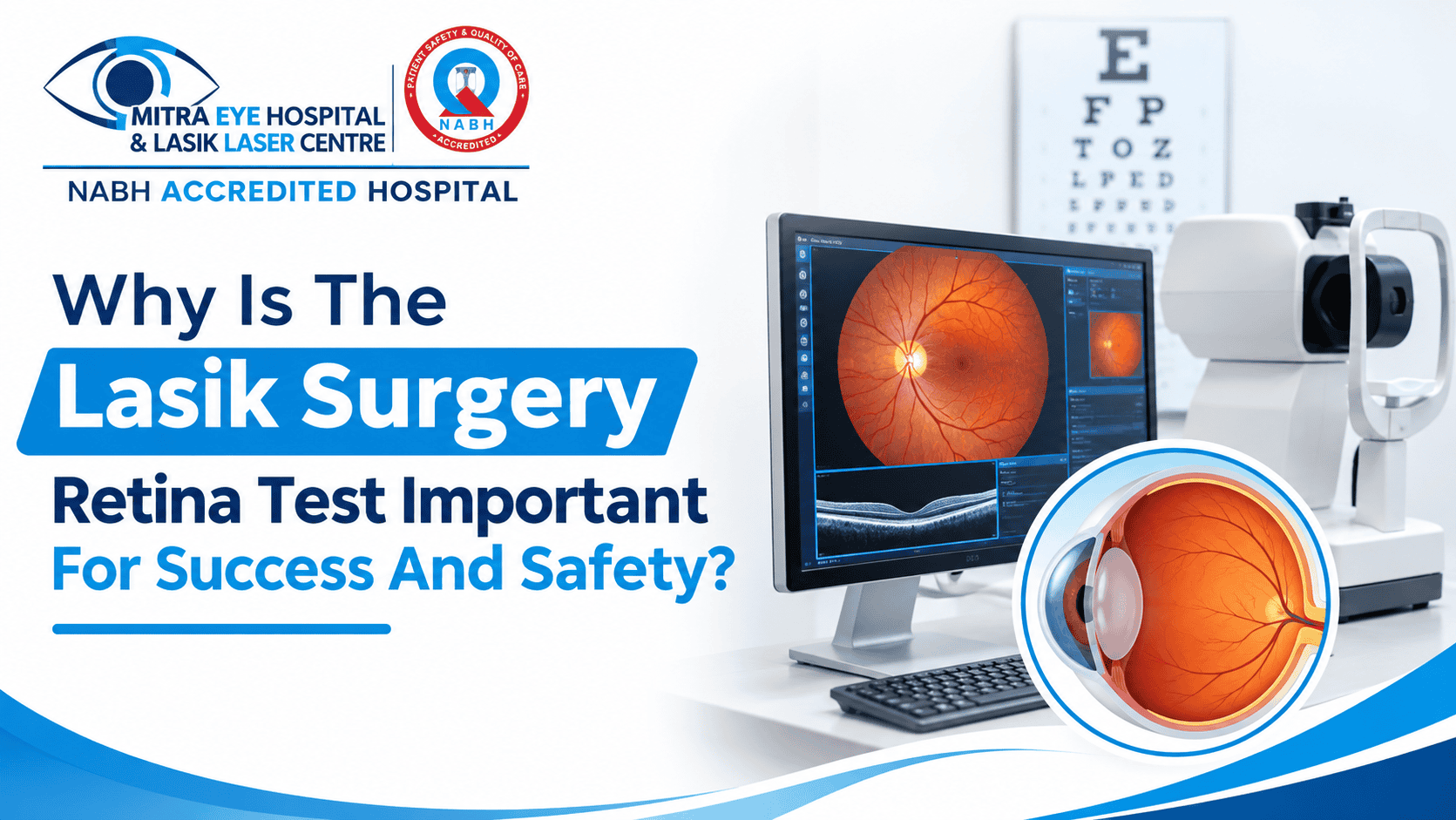

LASIK eye surgery is a highly rapid, sophisticated and efficient vision-correction surgery that provides long-term results for various patients. This surgery is suggested to the patient with refractive disorders such as farsightedness, nearsightedness or astigmatism for glass free and clear vision for which proper checkup for retina before LASIK surgery is important that ensures success, safety as well as overall eye health for the long term.
The retina checkup provides assistance to eye specialists to detect pre-existing retinal problems, damaged retina or retinal detachment, which may cause severe complications during the LASIK surgery if not detected. Therefore, a thorough checkup of the retina before LASIK surgery is necessary to reduce vision-threatening complications and achieve successful results from LASIK surgery.
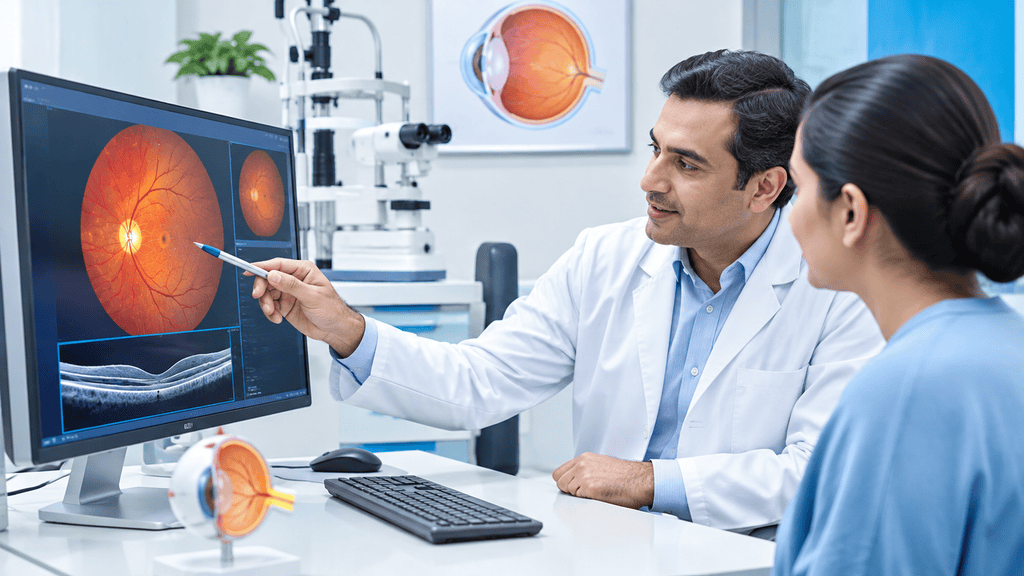
In this blog, you will learn that a retina test is required before LASIK surgery, what occurs during the retina test, the risks of avoiding the test and how it provides long-term vision safety.
What’s a retina test?
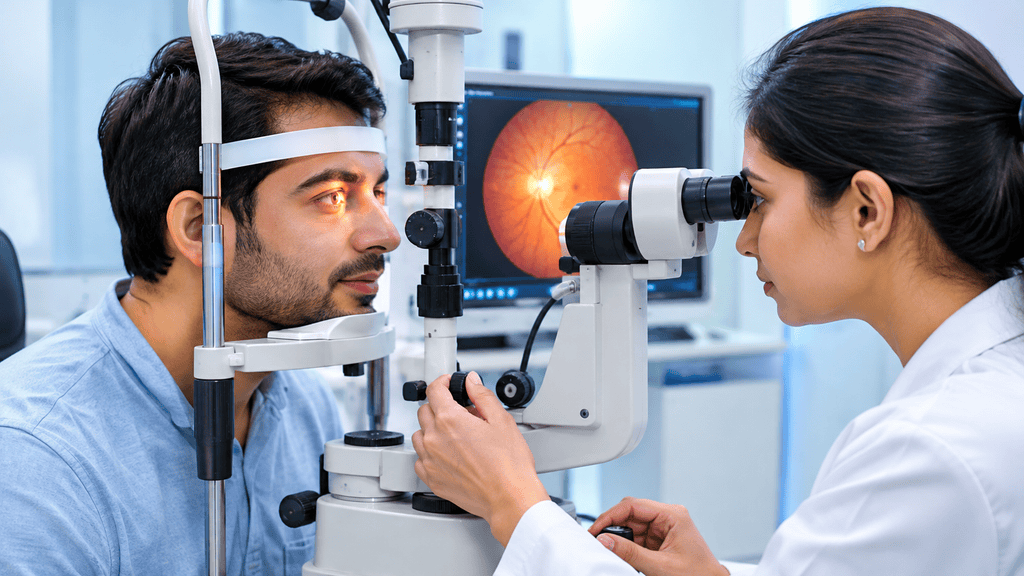
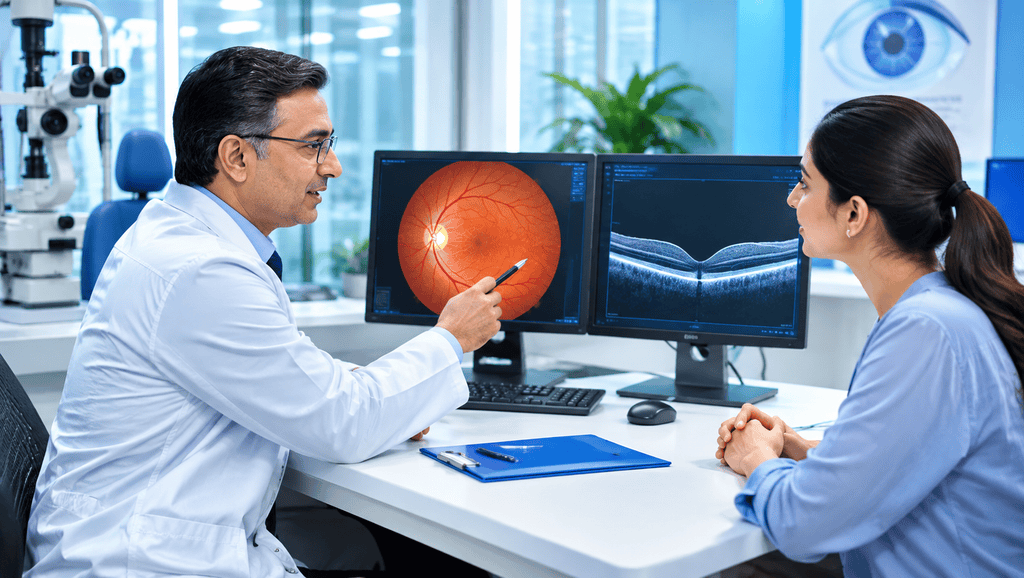
It is a complete eye test that checks the well-being and condition of the retina. The retina transmits visual data to enable you to see properly. Any retinal abnormality will result in vision loss, foggy vision, retinal detachment and other problems. A retina test is conducted by eye specialists with the help of sophisticated eye diagnostic equipment, including:
- Retinal imaging
- Retina scanning
- Fundus photography
- Dilated eye exam
The test assists in diagnosing retinal holes, retinal detachment, lattice degeneration and other retinal conditions that can be risk factors during or after LASIK surgery.
Why is a retina test required before LASIK surgery?
- Identifies retinal problems
One of the main reasons why retina testing is required before undergoing LASIK surgery is to identify hidden retinal problems that doctors may not know about without testing. Patients who are long-term contact lens wearers or have high myopia will develop a thin and weak retina or peripheral retinal degeneration. These are not visible retinal problems but can be evaluated in retinal testing. If LASIK surgery is considered without testing, it may further result in:
- Risk of vision loss
- Retinal detachment
- Surgical complications
By performing the retinal test, eye specialists can ascertain if the retina is healthy enough to be exposed to LASIK surgery or if any steps are taken for precautions.
2. Prevent retinal detachment after surgery
Retinal detachment is a serious complication of LASIK surgery, especially in patients with:
- High myopia
- Weak or thin retina
- Retinal holes
Once the LASIK surgery is done, the cornea is reshaped with the laser for the vision correction. Yet if the patient has a weak retina, then the pressure involved in surgery may cause a risk of:
- Permanent vision loss
- Tears of the retina
- Retinol detachment
- Loss of permanent vision
Retinal examination before LASIK surgery allows the doctor to identify weakness in the retina and take corrective measures to reduce complications.
3. Reduce risk of post-surgery complications
Avoiding the retinal test before LASIK surgery can raise the risk of:
- Detachment of retina
- Hole or tear in retina
- Vision loss
- Flashing lights
By performing the complete retinal test, the doctors can easily identify and treat the retinal abnormality and make a smooth and risk-free LASIK procedure with no chances of further complications, and also allow the doctor to deliver preventive retinal procedures if required.
If any retinal tear, retinal weakness or lattice degeneration is found during the retinal test, then the physician provides the preventive retinal procedure of:
- Retinal laser barricade
- Preventive laser treatment that blocks the tears, holes or weak spots of the retina
- Reduces the risk of retinal detachment following LASIK surgery
- The procedure lasts 10 to 15 minutes and is required to perform the procedure and ensure eye safety in the long terms
- Scleral buckling
- There are some instances where additional treatments are required to provide strength to compromised retina.
- Keep the retina in place after surgery
Having these preventive treatments done after retinal risk is identified allows the patients to have LASIK surgery safely, without any complications in future.
If not having the retain test before LASIK surgery
Not having the retinal test before undergoing LASIK surgery can result in :
- Increased retinal susceptibility, which leads to retinal detachment
- Vision loss or distortion after surgery
- Floaters, flashes or blurry vision upon waking
- Vision-threatening injuries
- That’s why it is highly recommended to undergo a full retinal checkup before undergoing LASIK surgery.
Conclusion
Getting a retina check before LASIK for high myopia is not a routine checkup; it is an important step that ensures successful and safe LASIK surgery, avoiding vision-threatening complications and permanent, sharp vision without lenses or glasses. At Mitra Eye Hospital & Lasik Laser Centre, the safety of patients is our major concern, and we also make sure that patients who undergo LASIK surgery undergo complete retinal testing before undergoing LASIK surgery performed by experienced eye specialists. Before undergoing retinal testing or LASIK surgery, it’s important to schedule a consultation with your eye care specialist or with Dr. H Mitra at our hospital.
FAQ’S
Why is the retina test important before LASIK surgery?
Before LASIK surgery, a retinal test is important to assess retinal health in detail and to prevent complications during the LASIK surgery.
Which problems can be identified during retinal tests before surgery?
Retinal tears, retinal holes and retinal thickness are the problems that can be identified during retinal tests before surgery.
How are vision and surgery results protected by retinal testing?
Vision and surgical results are protected by retinal testing, as it prevents complications and helps ensure safe and smooth surgery.
Which type of tests are performed to check retina before surgery?
To check the retina, the tests that are used are OCT, retinal scanning and fundus photography.